
May 6, 2026 Carnegie Hall Concert Showcases 2025 Ibla Grand Prize Winners
Comments Off on May 6, 2026 Carnegie Hall Concert Showcases 2025 Ibla Grand Prize WinnersMay 28, 2026 by Admin
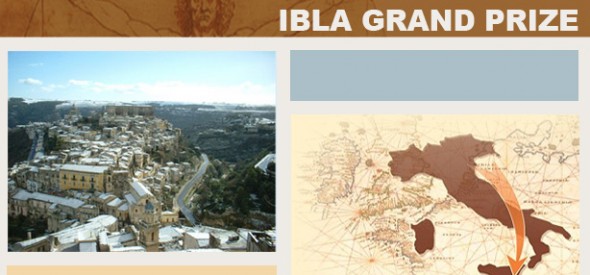
 If you’re looking for surprises in the all-too-frequently unsurprising world of classical music, you can’t do better than the Ibla Grand Prize. Dr. Salvatore Moltisanti, this marvelous competition— and their annual New York international showcase presentations of musical talent at the highest level—have kept us surprised and delighted for many years.
The first surprise is the beautiful Sicilian Baroque city of Ragusa-Ibla, from which the competition gets its name. (Strong hint—it and the whole of southeastern Sicily are well worth a visit.)
 Second is the astonishingly high level of talent of the musicians from around the world who gather there each summer to show how good they are by performing a variety of music in many different styles.
Third is the amazing range of performers that have performed there over the years—literally from accordionists to whistlers, with saxophone quartets, electronic music composers, singers of every description, string and wind players, lots of pianists and many, many others along the way.
Fourth is the modus operandi of the core competition not being against other musicians, but rather judged against the highest professional standards.
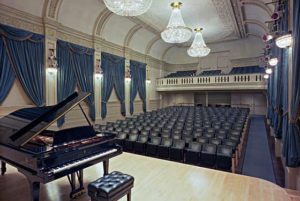
And on May 6, 2026, Ibla Grand Prize brought more surprises and winners of the 2025 competition to Weill Recital Hall at Carnegie Hall.
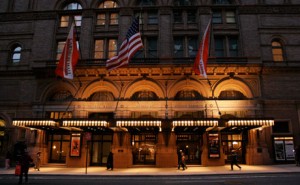
This year’s concert was structured differently than past editions, and was presented as more of a review than a straight recital. This made for a very enjoyable, varied and often surprising event.
Leading off was Italian Maximilian Trebo, performing Brahms. Initially, he could have let up a little bit on the volume, but this was overall a good, strong, forceful performance. Nice articulation, and his more subtle side came forth as the music progressed. He projects, a calm, assured stage presence.
And suddenly, in his Gulda selection, James P. Johnson and Fats Waller were standing on either side of the pianist, offering their encouragement. This was a well-considered, very well played and pretty cool addition to the presentation.
Next up was 16-year old, Italian violinist Gianni Burriesci, who started with Paganini’s Capriccio #24. Not the cleanest playing, but still, an admirable base from which to build the virtuosity. For the future, watch that intonation and phrase shaping….
Then came Burriesci again, but this time with the brilliant Georgian pianist Tamara Licheli. They presented a reduction of the Sibelius Violin Concerto. Burriesci is much more suited to this than Paganini, with lovely, lyrical playing, and Licheli brought sensitive support to complete the picture.
Following this was the youngest performer of the evening, 11-year-old Badmaarag Ganbat from Mongolia. On display was a surprisingly good sense of musicality and musical shaping from one so young. Very fine sense of line and forward motion in the Liszt.
Ganbat followed this with a charming bit of Asian exotica from Semblin Gonchigsumlaa, which really showed the pianist’s wonderful control.
She closed her set with Rimsky-Korsakov’s Bumblebee. All of her gifts were on full display, with a controlled, measured, very mature approach to a piece that can easily get out of control.
Very strong and approving audience reaction.

A blast of trombone and piano heralded Stravinsky’s Firebird, with strong purposeful work from both players, Japanese trombonist Kojiro Fujihara and pianist Satoshi Kawauchi. Their performance, individually and collectively, was so good I almost didn’t miss the rest of the orchestra.
This was followed by the aforementioned Tamara Licheli presenting Liszt’s La Campanella. This wonderful virtuoso brings a strong, sensible approach to this music, with good shaping and a marvelous and appropriate sense of the dramatic.
Next, the return of the Japanese trombone and piano duo, performing an interesting mélange of patriotism, arias, lyricism, sentimentality, Japanese chord structure, Puccini and more. Strong, accurate playing and a lot of fun.
Then, something that has become one of the highlights of these Ibla winners’ concerts, Polish accordionists—this year Wieslaw Ochwat and Maciej Zimka, both members of that country’s seemingly endless accordion virtuoso fraternity. They opened with a nicely controlled speed-up of Anitra’s Dance from Grieg’s Peer Gynt and finished with a slightly overheated and perhaps too fast Libertango from Piazzolla. Any slight interpretational issues were easily overshadowed by their remarkable playing and the audience response to it.
And, in closing, violinist Burriesci and pianist Licheli, with both coming across as they had previously in the evening—the violinist with the same issues as in the Paganini, and the pianist with the same unerringly strong and sensitive support.
As always, throughout the evening, Dr. Moltisanti was an exceptionally genial, informative and eloquent host. It once more confirmed my belief in his genius as a musician, teacher and advocate for musicians from around the world.
And, as always, this was a strong showing of the talent that finds its way to Ragusa-Ibla.
And, of course, this being an Ibla Grand Prize event, one more surprise—an operatically whistled aria from old Ibla friend Michael Barrimo.
…Meanwhile, around the world, performers were preparing for this Summer’s Ibla Grand Prize 2026….
Jeffrey James
Editor, International Composer
http://www.jamesarts.com/internationalcomposer/
Editor, SoundWordSight.com
May 28, 2026
Comments Off on May 6, 2026 Carnegie Hall Concert Showcases 2025 Ibla Grand Prize Winners
Sorry, comments are closed.

